
“United by Music?” — Reflecting on Eurovision’s Most Ambitious Promise
“United by Music” has become one of the defining slogans of the Eurovision Song Contest. But what does it actually mean? Can music truly create connection in politically divided and emotionally fragmented times? Or has the phrase become more of an aspiration than a reality?
These questions lie at the centre of the third major roundtable of the EUROVISIONS International Conference 2026. Bringing together artistic, academic, and personal perspectives, the discussion invites reflection on music not as an abstract ideal, but as a lived experience shaped by audiences, performers, media, and politics. The roundtable asks whether unity through music requires shared values—or whether it can also emerge from disagreement, diversity, and conflicting interpretations. It explores how Eurovision audiences experience connection, how artists navigate expectations and controversy, and where the limits of cultural togetherness may lie.

One of the participants is Austrian singer Timna Brauer, who represented Austria at the Eurovision Song Contest in 1986 and subsequently built an international career crossing musical and cultural boundaries. Her work ranges from chanson and jazz to Jewish music and intercultural peace projects involving Israeli and Palestinian musicians. Through both her artistic and educational work, she has continuously explored music as a medium of dialogue, coexistence, and understanding.

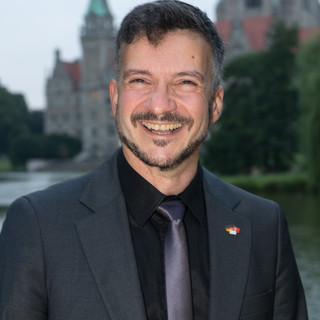
Joining the discussion is Jack Shepherd, Senior Lecturer in Tourism Studies at Mid-Sweden University, whose recent research has critically examined Eurovision’s relationship to politics, universalism, and conflict. In his work, he argues that Eurovision increasingly struggles to reconcile its proclaimed values of inclusivity and equality with the universal openness of participation within the EBU framework. Drawing on examples such as the wars in Ukraine and Gaza, as well as recent artistic controversies, his contribution asks whether “United by Music” can still function as a meaningful principle under current geopolitical conditions.

The roundtable also features Laureen Hannig, whose research focuses on populist communication surrounding the Eurovision Song Contest. Her work analyses how political actors instrumentalise Eurovision narratives and how discourses around identity, belonging, and “us versus them” are negotiated in relation to the contest. At the same time, her perspective as both researcher and Eurovision fan reflects the increasingly important role of younger scholars in shaping Eurovision Studies.
Together, the participants will reflect on questions that go far beyond Eurovision alone: Is music politically neutral? Can cultural events create meaningful forms of connection even in times of conflict? Do audiences need to agree in order to feel united—or is sharing the same cultural space already enough?
Rather than seeking simple answers, the roundtable aims to open a nuanced and respectful conversation about the possibilities and limitations of music as a unifying force. In doing so, it addresses one of the central tensions not only of Eurovision, but of contemporary Europe itself.


Comments