
70 Years of Public Value: What Has Eurovision Contributed?
For seven decades, the Eurovision Song Contest has been far more than a music competition. It has served as a showcase for technological innovation, a stage for cultural diplomacy, a laboratory for public service broadcasting, and a platform for participation, identity, and representation. The second major roundtable of the EUROVISIONS International Conference 2026 takes these different dimensions as its starting point and asks: What kinds of public value has Eurovision created over the past 70 years?
Bringing together experts from broadcasting, music journalism, technology, and artistic practice, the panel reflects on Eurovision as a unique European institution situated between entertainment, media innovation, and societal change.

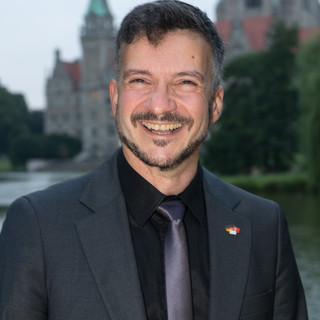
Among the participants is Klaus Unterberger, Head of the Public Value Department at the Austrian Broadcasting Corporation (ORF). His work focuses on public service media, quality journalism, democratic participation, and the societal role of broadcasting. He has been closely involved in international public value debates within the EBU and is one of the initiators of the Public Service Internet Manifesto. His perspective connects Eurovision directly to wider discussions about the future of public broadcasting in Europe.

The technological dimension of Eurovision is represented by Volker Schmitt from Sennheiser, whose career has been dedicated to professional audio engineering, RF wireless systems, and large-scale live productions around the globe. Eurovision has repeatedly functioned as a testing ground for new broadcasting and sound technologies—from early transnational television exchange to cutting-edge live production systems—and Schmitt’s contribution highlights the role of technical innovation as a core aspect of public value.

The panel also includes Lithuanian journalist and broadcaster Ramūnas Zilnys, who has covered Eurovision for more than two decades and currently serves as Head of Pop Music at Lithuanian Radio and Television (LRT). His experience as commentator, journalist, and jury member offers insight into how Eurovision contributes to national media cultures, public debate, and cultural participation across Europe.

Adding an artistic perspective is Austrian singer and songwriter Bamlak Werner, whose music reflects experiences of identity, belonging, and intercultural dialogue. Her participation in the Austrian Eurovision preselection “Vienna Calling” with the song “We Are Not Just One Thing” directly resonates with many of the themes at the heart of the conference: diversity, representation, visibility, and the question of who gets to be heard within European popular culture.
Together, the roundtable participants will explore how Eurovision has contributed to public value in different ways: by fostering collective experiences, enabling cultural exchange, strengthening minority visibility, supporting creative industries, advancing media technologies, and creating spaces for democratic participation and shared identity.
At a time when public service media are increasingly challenged politically, economically, and technologically, the discussion also asks what role Eurovision can continue to play in the future—and whether its public value is more relevant today than ever before.


Comments