
Why Eurovision Research Matters: Public Value Beyond the Stage
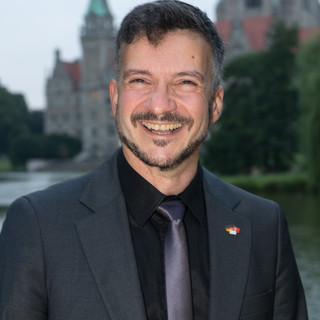
Can research on the Eurovision Song Contest create public value? And why should academia engage seriously with a television entertainment format that has often been dismissed as “just music” or “just entertainment”? These are the central questions of the first major roundtable of the EUROVISIONS International Conference 2026. Bringing together scholars from different disciplines and countries, the panel reflects on the growing importance of Eurovision Studies and asks how research itself contributes to public value by fostering understanding, dialogue, participation, and critical reflection.

The discussion builds on the recently published article “Researching Eurovision as Public Value”, contributed by members of the Eurovisions Research Group to the ORF Public Value publication series TEXTE dedicated to this year's Eurovision Song Contest in Vienna. The article argues that Eurovision is far more than a television programme: it is a cultural, political, musical, economic, and media phenomenon that offers unique insights into European societies and their transformations.

The roundtable brings together scholars whose work demonstrates the diversity and
interdisciplinary richness of Eurovision-related research. Among them is Magdalena Fürnkranz, Postdoctoral Fellow at the University of Music and Performing Arts Vienna, whose research explores performativity, gender, intersectionality, and popular music cultures. Her work on identities and representation in music makes her perspective particularly valuable in understanding Eurovision as a performative and social space.

Joining the panel is also Oscar Vorobjovas-Pinta from Edith Cowan University in Australia, whose research focuses on tourism, festivals, LGBTQ+ communities, and inclusive event cultures. His recent work highlights Eurovision as a transnational event shaping tourism, belonging, and community-building beyond the television screen.
The roundtable further reflects on the role of academic communication itself. Through conferences, publications, public discussions, and formats such as the Eurovisions Science Slam, Eurovision research increasingly reaches audiences beyond academia—including fans, practitioners, journalists, broadcasters, and artists. In this sense, Eurovision Studies do not merely analyse public value; they actively participate in creating it.
At a time when public service broadcasting and academic expertise are both facing increasing societal pressure, the discussion asks an urgent question: What does it mean to research popular culture responsibly and publicly today?
The roundtable promises to open the conference with a timely and thought-provoking debate on why Eurovision research matters—not only for understanding Eurovision itself, but also for understanding Europe, media, identity, and society.


Comments