
A Genre in Itself? Exploring the Eurovision Song Contest Through Music Analysis
As part of the vibrant network of Eurovision(s)-related activities taking place during Eurovision week in Vienna, we are delighted to highlight another exciting partner initiative hosted at the mdw – University of Music and Performing Arts Vienna.
Under the title “A Genre in Itself? Music Analytical Approaches to the ESC”, internationally renowned songwriter scholar Joe Bennett (Berklee College of Music, Boston) and Ralf von Appen (Institute for Popular Music, mdw) will explore the Eurovision Song Contest from a music analytical perspective and ask a fascinating question: Has Eurovision developed into a genre of its own?
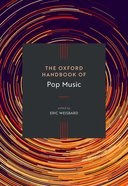
The discussion also connects to the upcoming Oxford Handbook of Pop Music, which will include a contribution by members of the Eurovisions team, suggesting that the Eurovision Song Contest showcases a diverse range of musical forms, each deserving of in-depth analysis and consideration of their historical and cultural contexts.
Wolther, Irving, et al., '“Beautiful Song”: Is the Music Presented at the Eurovision Song Contest a Musical Form in Its Own Right?', in Eric Weisbard (ed.), The Oxford Handbook of Pop Music, Oxford Handbooks (New York, NY, 2026; online edn, Oxford Academic, 30 May 2026), https://doi.org/10.1093/9780197760284.003.0015, accessed 7 May 2026.
The session begins on Wednesday, 13 May at 17:00 and takes place in Seminar Room 1, Hanuschgasse 3, Staircase 1 (opposite the porter’s desk), second floor, right wing.
An additional event on Friday 15 May at 15:30 brings together current musicological and popular music research on the ESC and reflects on how the contest has shaped musical aesthetics, performance conventions, and industry trends over decades. The presentations will be illustrated with numerous song examples and cover a wide range of topics, including voting criteria, stylistic developments, differences between Eurovision entries and mainstream pop music, gender identities in performers’ self-representation, and the long-term career trajectories of Austrian Eurovision participants. Following the scholarly programme, the focus shifts from analysis to live performance: At 17:00, the courtyard of the mdw main building will host the “Alle Neun Contest”, where students from all nine Austrian music universities compete by presenting both a cover version and an original composition.
The initiative perfectly reflects the spirit of Eurovision(s) week in Vienna: connecting scholarship, creativity, performance, and public engagement. We are particularly pleased to see how different institutions and initiatives contribute to a broader dialogue on Eurovision as a musical, cultural, and societal phenomenon.
More information on the “Alle Neun Contest” can be found here: mdw – Alle Neun Contest


Comments